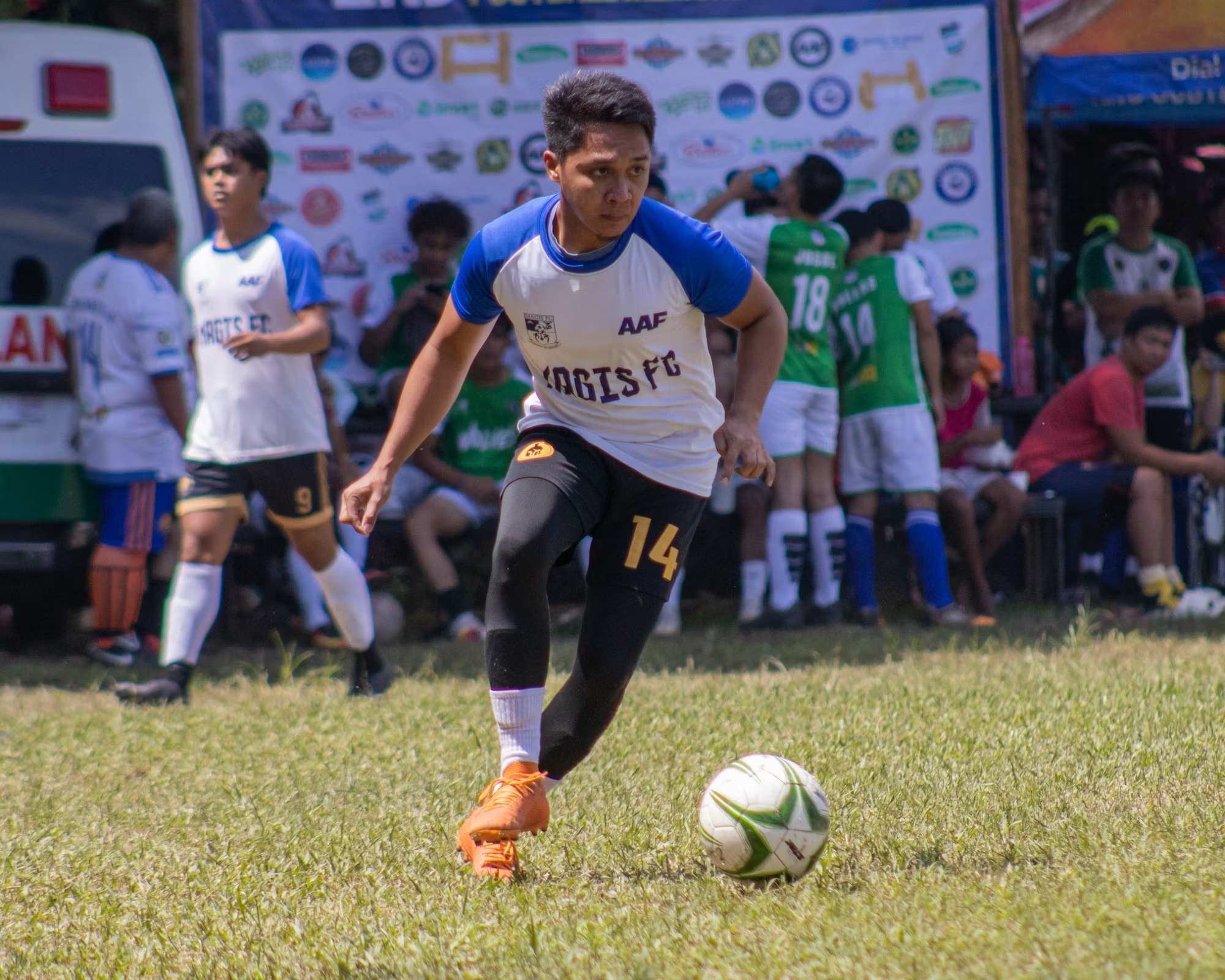
Soccer, known as football in many parts of the world, is a game that captivates the hearts of millions. Beyond its global popularity lies a rich tapestry of skills and techniques that players develop over time. Mastering these elements is crucial for success on the pitch, enabling players to perform effectively and contribute to their team’s overall strategy. This article explores essential soccer skills and techniques, offering insights into their importance and application in the game.
Dribbling: The Art of Ball Control
Dribbling is one of the fundamental skills in soccer, allowing players to maneuver the ball while evading defenders. A proficient dribbler can change direction quickly, accelerate, and maintain close control of the ball, creating space for themselves and their teammates. Techniques such as using both feet, employing various surfaces of the foot, and incorporating body feints are essential for effective dribbling. Players like Lionel Messi and Neymar Jr. have become icons of dribbling, showcasing how skillful ball control can unlock defenses.
Passing: The Foundation of Team Play
Passing is the backbone of soccer, facilitating teamwork and maintaining possession. Different types of passes—such as short passes, long passes, through balls, and crosses—are vital for advancing the ball and creating scoring opportunities. Precision and timing are critical; a well-timed pass can exploit defensive gaps and lead to a goal-scoring chance. Players need to develop a keen understanding of their teammates’ movements and the overall game flow to enhance their passing ability. Legendary playmakers like Xavi Hernandez and Andrea Pirlo exemplify how passing can dictate the rhythm of the game.
Shooting: Finding the Back of the Net
Shooting is the skill that ultimately determines success in soccer. A powerful and accurate shot can decide matches, making this technique vital for any aspiring player. Understanding the mechanics of shooting—such as body positioning, foot placement, and follow-through—is crucial for consistently hitting the target. Players can practice different types of shots, including volleys, half-volleys, and headers, to become versatile in front of goal. Famous strikers like Cristiano Ronaldo and Thierry Henry have demonstrated the importance of shooting techniques in their goal-scoring prowess.
Defending: The Importance of Solid Defense
While scoring goals often garners the most attention, effective defending is equally critical to a team’s success. Defenders must develop skills such as positioning, tackling, and intercepting passes. Understanding when to apply pressure, when to retreat, and how to read the game are essential for a successful defensive strategy. Players like Paolo Maldini and Franco Baresi have become legends for their defensive mastery, illustrating that strong defense can be as impactful as a potent attack.
Goalkeeping: The Last Line of Defense
Goalkeepers play a unique role on the soccer field, serving as the last line of defense against opposing attackers. Essential skills for goalkeepers include shot-stopping, positioning, and distribution. A good goalkeeper must remain agile, anticipate opponents’ movements, and communicate effectively with defenders. Training in reflexes and decision-making is vital, as goalkeepers often face high-pressure situations. Legendary keepers like Gianluigi Buffon and Lev Yashin have shown how crucial a goalkeeper’s skills are to a team’s success.
Set Pieces: Capitalizing on Opportunities
Set pieces, including free kicks and corner kicks, provide teams with significant opportunities to score. Mastering these situations requires coordination, practice, and strategic planning. Players must understand the importance of positioning, timing, and execution when taking set pieces. Teams often design specific plays to capitalize on set-piece situations, demonstrating how crucial these moments can be in deciding a match’s outcome. The success of teams in utilizing set pieces can often swing the momentum in their favor.
Tactics and Strategy: The Bigger Picture
Beyond individual skills, understanding tactics and strategies is vital for any soccer player. Teams employ various formations, such as 4-4-2, 4-3-3, or 3-5-2, each with its own strengths and weaknesses. Players must adapt their skills to fit the team’s tactical approach, working together to achieve common goals. Analyzing opponents’ strategies and adjusting accordingly can significantly impact the outcome of a match. Coaches like Pep Guardiola and José Mourinho have become renowned for their tactical innovations, proving that strategic thinking is just as important as individual talent.
Youth Development: Building Future Talent
Developing soccer skills begins at a young age, with youth programs and academies playing a crucial role in nurturing talent. These programs focus on teaching fundamental skills, fostering teamwork, and instilling a love for the game. Coaches emphasize the importance of practice and dedication, encouraging young players to hone their skills through drills and match experience. Investing in youth development ensures a continuous flow of skilled players into the sport, contributing to its future growth and success.
Health Benefits of Playing Soccer
Participating in soccer offers numerous physical and mental health benefits. The sport enhances cardiovascular fitness, endurance, and agility, while also promoting teamwork and social interaction. Playing soccer can help reduce stress, improve mood, and build self-esteem. Engaging in regular physical activity through soccer cultivates a healthy lifestyle and fosters lifelong friendships among teammates.
Conclusion
In conclusion, mastering the skills and techniques of soccer is essential for players aiming to excel in the sport. From dribbling and passing to shooting and defending, each skill plays a critical role in the overall game. Understanding tactics and the importance of set pieces further enhances a player’s ability to contribute effectively to their team. As soccer continues to evolve, the emphasis on skill development, youth programs, and player welfare remains paramount. By investing time and effort into mastering these essential skills, players can enjoy a fulfilling journey in the beautiful game, becoming part of a global community united by their love for soccer.
